Roofing in Fairhope
Wind off open water on one side of town and deep shade on the other, which means two different roof problems inside the same few miles.
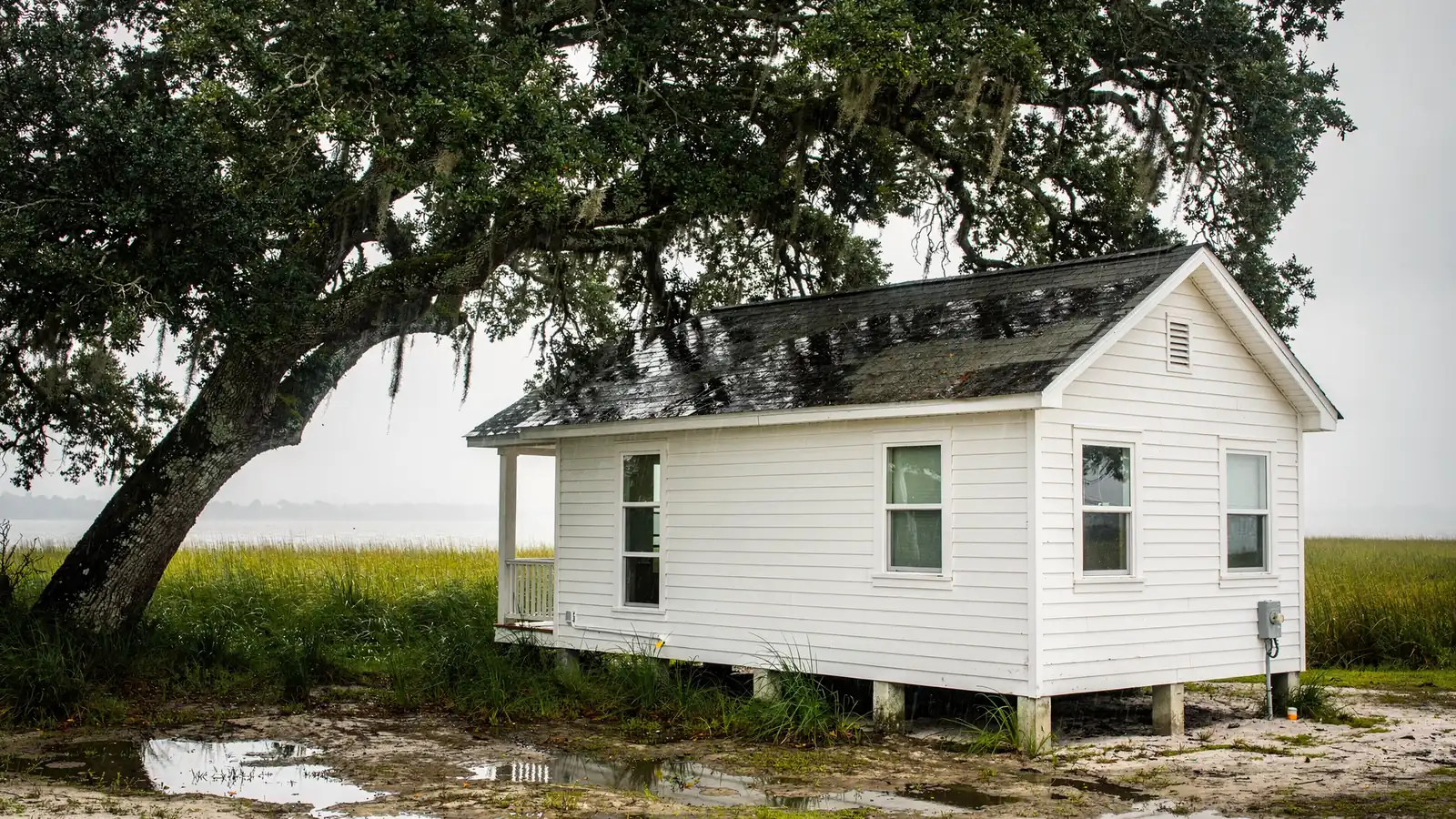
Two towns inside one town
Roofs here fall into two groups and which one you are in is decided by geography rather than by the house.
Nearer the bluff and the water, the defining fact is fetch. Wind that has crossed open water arrives without having been slowed or confused by anything, and it loads a roof hardest around its outside edge and at the corners. Slopes facing the bay take that load directly. What fails is the perimeter, in a band, while the field of the roof stays intact, and that pattern reads as nothing much to somebody expecting scattered damage.
Further in, the defining fact is the tree canopy. Big live oaks over a street keep the roofs beneath them damp and dark, and damp dark roofs age differently: slower in some ways, because they are out of the sun, and worse in others, because they never dry.
A quote that treats both halves of town the same has not thought about it.
What the shade does
Three things, all slow enough to be mistaken for age.
Algae is the visible one, dark streaks running down a slope, and it is cosmetic. Moss is not: it has a hold on the surface, it keeps water against the shingle, and as the cushion thickens it lifts the bottom edges of the courses above it. In real shade it comes back after every cleaning, which is why clearance beats washing.
Limbs resting on or sweeping across a roof scour the surface in one patch with every wind. The result years later is a worn area with no storm behind it, and on a claim that reads as wear, which means it is yours.
And debris fills the valleys, which carry more water than anywhere else on a roof. An obstruction there pushes water sideways under the courses either side and produces a leak in a place with nothing above it to explain the leak.
Better roofs, different rules
A good deal of the roofing here is upgraded: tile, architectural shingle at the heavy end, standing seam metal. All of it outlasts a builder grade roof and all of it behaves differently when the weather tests it.
Tile cracks in individual pieces while the system keeps working, so the honest repair is frequently a careful count and a scattered replacement rather than a roof. Metal shrugs off impacts that would finish a shingle roof and then dents, and whether cosmetic denting is covered is a question for your own declarations page rather than a general rule.
None of which changes what the wind does at the edges, which is where this part of the coast tests everything.
The grant applies here
Baldwin County sits inside the area the state grant programme serves, and the standard it pays toward is the one worth understanding before you spend anything, because the cheap moment for it is while the covering is off anyway. What the standard actually asks for is a short read, and what a replacement costs puts the numbers beside it.
If a storm is the reason you are here rather than planning, start with what the wind did, because edge losses and scattered impacts are argued in completely different ways.
Questions people ask
- My roof faces the bay and my neighbour's does not. Does that really matter?
- It does, and more than most people expect. Wind coming off open water has had nothing to slow it or break it up, so it reaches the roof close to full strength and loads the edges and corners hardest. A slope facing the water is the one to ask about when anybody quotes, and the perimeter detail on that side is where the money should go.
- Is the dark streaking on my shaded roof doing harm?
- Streaking is algae and it is cosmetic, however unpleasant it looks. Moss is the one that matters, because it holds water against the surface and works under the edges of the courses as it thickens. In heavy live oak shade it returns after cleaning, so opening the slope to light and air is worth more than washing it.
- I have a tile roof. Does that change the conversation?
- Considerably, and it is worth being firm about who works on it. Tile behaves differently under wind and impact, the detailing is not the same, and a company that mostly lays asphalt will be learning at your expense. Ask to be shown tile work they finished nearby a few years ago, then go and stand in front of it.
Last checked 2026-09-28.