What to do to a roof before the season starts
Everything on this list is easier, cheaper and more available in April than it is in September. That is the entire argument.
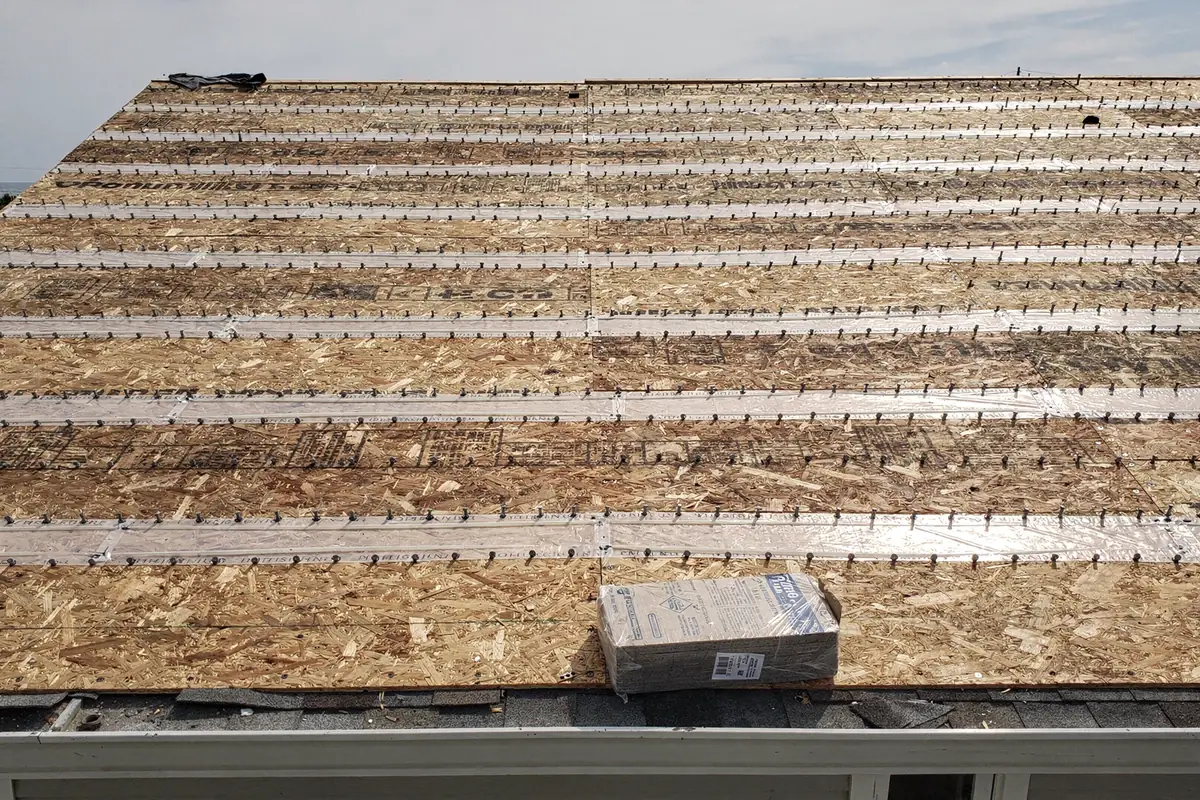
None of this is dramatic and none of it is expensive. It is the set of things that are simple in spring and impossible in the week a storm is named, and working through it once a year is the cheapest insurance a roof gets.
Photograph it, and write down the date
Ten minutes, from the ground, on all four sides. Include the gutters and downspouts, the vent caps, the chimney flashing and anything else thin and painted. Photograph the ceilings inside too, particularly upstairs corners and along the outside walls.
Keep them somewhere with the date attached. The entire value of this is in an argument you hope not to have: when somebody suggests damage was already there, a clean dated set from before the season answers it and nothing else does.
Deal with the small parts
Vent boots are the commonest leak on any roof around here, and the sun finishes them long before the shingles around them are done. A split collar leaks down the pipe and shows up on a ceiling somewhere unrelated. They are a cheap part and a short visit.
Sealant is not a roofing material and gets treated as one constantly. Where a previous repair is a smear of black mastic, note it. Mastic has a short life in this heat and a patched detail is a postponed one.
Ridge and hip caps sit on the most exposed line of the roof and are the first thing a gust gets under. Loose or lifted caps are worth attention before rather than after.
Look hard at the edges
The edge of a roof is where wind does its work, because suction concentrates around the perimeter and peaks at the corners. It is also where the cheapest corners get cut.
From the ground, look along each rake and eave at a low angle. Tabs standing proud, a line that is not straight, edge metal that has worked loose or lifted at a joint. Any of those is a place for the next storm to get a start, and all of them are small fixes now.
If the roof is being replaced at some point anyway, the perimeter is where the specification matters most, and the FORTIFIED standard is built around exactly that reasoning.
Clear the water paths
Gutters full of grit and leaves back water up under the courses at the eave, which is the last place you want standing water. Valleys are worse, because a valley carries more water than any other part of the roof and an obstruction there pushes it sideways under the shingles either side.
Branches resting on or sweeping the roof scour the surface in one patch with every wind. Cut them back for clearance and the slope dries faster as well, which slows the algae and keeps moss from getting a hold.
Find the paperwork before you need it
Two numbers and one document.
Your wind and hail deductible, which on a Gulf Coast policy is frequently worked out as a share of what the dwelling is carried for, not the flat sum that applies to the rest of the cover. On a dwelling carried at three hundred thousand dollars, two percent is six thousand, and people find that out at the worst possible moment.
Whether you are on replacement cost or actual cash value, because it decides whether you get the depreciation back after the work is done.
And the roof's own paperwork: age, invoice, any warranty and whether it transferred when you bought the house.
And know what you are looking at afterwards
If something does come through, the first job is telling wind loss from impact damage, because they leave different marks and are argued in completely different ways. That distinction is worth reading now rather than in the week it matters, and having somebody look properly covers what you should get back from whoever comes out.
Questions people ask
- How much of this can I do myself?
- The looking, all of it, from the ground. Photographs, gutters, cutting branches back, finding your policy documents. What is worth paying somebody for is anything that involves being on the roof, and in particular anything involving the edges, because the edge is both the most important detail and the least forgiving place to be standing.
- Is it worth doing work now if the roof is old anyway?
- It depends on how old. A roof with years left is worth maintaining, and the small parts are cheap. A roof genuinely at the end is a different calculation, and spending on it in spring mostly buys the option of deciding later rather than in a hurry.
- What is the single highest value thing on this list?
- The dated photographs, and it is not close. They cost nothing, they take ten minutes, and they are the one thing that cannot be created after the fact if the question of when the damage happened ever becomes an argument.
Last checked 2026-09-28.